
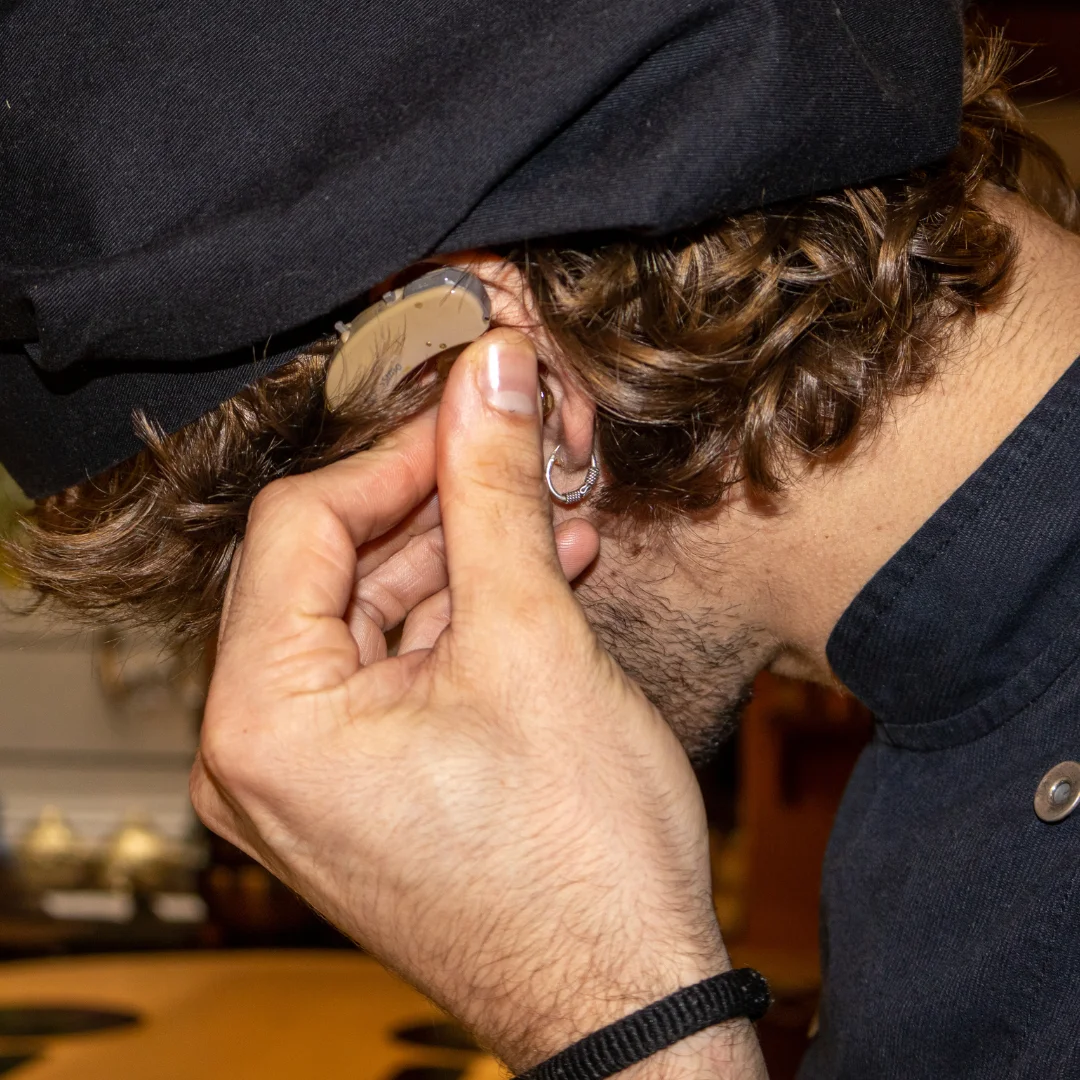
Following dinner conversations becomes challenging when high ambient noise interferes with your focus and hearing. Our practice provides targeted diagnostics to evaluate hearing in quiet atmospheres as well as complex noise environments. Once the diagnostic etiology of your difficult hearing is established, we implement personalized clinical and technological strategies.
Understanding the Contrast Between Quiet Hearing and Restaurant Noise
A tranquil environment produces a beneficial signal-to-noise ratio where spoken dialogue easily overpowers weak ambient noise. Dining rooms present an unfavorable acoustic reversal of this dynamic. Layered diner voices, kitchen activity, foreground music, and room reverberation muddy speech signals, requiring intense mental strain to follow dialogue.
Such difficulty frequently signals sensorineural high-frequency hearing loss, auditory processing dysfunction, or noise-induced cochlear damage. Dim lighting, physical tiredness, conversational distance, and divided attention exacerbate these listening deficits. Some people have normal results on a basic hearing test but still perform poorly on speech-in-noise testing. Disproportionate difficulty in restaurants justifies professional clinical assessment even if your everyday home hearing appears intact.
The Audiological Process for High-Frequency Hearing Loss
We begin with a history of the situations that cause trouble, along with questions about noise exposure, tinnitus, medications, family history, and changes in either ear.
Clinical pure-tone audiometry identifies hearing threshold levels across various frequencies by delivering sounds through air and bone pathways. High-frequency hearing loss commonly presents on the audiogram as a characteristic precipitous drop in the higher frequency ranges. Further clinical diagnostics feature tympanometry to evaluate eardrum and middle-ear mechanics as well as word-recognition testing for speech comprehension.
Standard quiet test booths fail to simulate real-world restaurant noise, making speech-in-noise testing a crucial clinical tool. It evaluates sentence-level speech comprehension as competing background babble increases in volume. Combined, these clinical findings determine whether your symptoms stem from acoustic audibility, word clarity, central noise filtering, or multifactorial causes.
The Role of Central Auditory Processing Disorders in Adults
Auditory processing disorders interfere with the brain’s ability to process and decipher acoustic signals arriving from the ears. A patient’s ears may demonstrate normal pure-tone sensitivity, but their central processing system struggles to separate background babble, distinguish consonant sounds, or follow swift discussions. We first rule out peripheral sensorineural deficits before deciding whether a dedicated auditory-processing test protocol or specialist referral is indicated.
Practical Strategies for Improving Speech Understanding in Noise
Targeted behavioral changes optimize the acoustic speech signal reaching your auditory system while providing clear visual context. Before dining out, choose a quieter restaurant or visit during an off-peak time. Restaurants featuring plush booths, wall acoustic panels, heavy drapery, carpeting, and sound-dampening materials provide superior listening compared to open rooms with reflective surfaces.
While seated at the restaurant:
- Request table placement positioned away from dishwashing stations, bustling bars, sound speakers, and celebratory gatherings.
- Position yourself with your back toward a solid partition to dampen intrusive background noise from behind.
- Position yourself directly opposite your companions where direct lighting highlights their facial expressions.
- Reduce physical spacing between yourself and companions to maximize direct speech perception.
- Direct your better-performing ear toward the companion you most need to understand.
- Instruct conversational partners to reword missed phrases instead of repeating the entire sentence verbatim.
- Validate significant pieces of information directly rather than feigning understanding during dialogue.
- Step away for a brief auditory rest when cognitive listening fatigue begins to set in.
- Request that friends speak with crisp clarity rather than speeding through dialogue.
- Yelling distorts natural speech formants and rarely makes spoken words easier to decipher.
Assistive Listening Technologies for Noisy Environments
Choosing the most effective auditory device requires evaluating diagnostic findings, acoustic lifestyle factors, and the presence of hearing loss. Professionally fitted hearing aids may use directional microphones, digital noise reduction, and dedicated restaurant programs to emphasize speech from the front and reduce some competing sound. Users should establish realistic expectations because no hearing device can fully eradicate all unwanted ambient speech.
Wireless remote microphones provide the most effective enhancement to real-world signal-to-noise ratios. Clipped near the speaker’s mouth or set nearby, the transmitter sends voice signals wirelessly to matched hearing aids or a receiver. This wireless transmission substantially diminishes the acoustic degradation caused by physical distance and ambient room noise.
Other clinically valuable tools include:
- Portable table microphones for managing multi-speaker dinner conversations
- Telecoils or hearing-loop systems in equipped venues
- Mobile speech-to-text applications delivering instant visual captions during dinner
- Modern wireless hearables delivering directional beamforming and sound enhancement
- Sound-meter apps and acoustic dining directories for locating quiet venues
We analyze suitable devices, verify functional compatibility with your current setup, and guide you through real-world operation.
How Medical and Audiology Specialists Resolve Hearing in Noise
Clinical hearing evaluations progress the diagnostic process past the typical assertion that hearing is adequate in quiet. We examine the challenging acoustic venues, conversational setups, and noise profiles you encounter to select appropriate diagnostic tests. Clinical evaluation commonly integrates pure-tone audiometric testing, middle-ear analysis, word recognition, and speech-in-noise measures. Central auditory-processing testing is considered whenever clinical intake and initial test outcomes point toward higher-order deficits.
Abrupt auditory reductions, unilateral hearing shifts, or rapid functional deterioration require prompt assessment by an ear, nose, and throat physician. Personalized care identifies the source of the difficulty rather than assuming restaurant noise is the only problem.
Book Your Comprehensive Hearing Evaluation Now
If dining in loud spaces leaves you feeling isolated, fatigued, or guessing at missed speech, contact us to schedule a thorough hearing evaluation. Our specialists can introduce effective interventions to support your hearing in noisy environments via precision hearing aid fittings, assistive devices, or audiological rehabilitation.
Connect with us today to arrange your clinical visit and take the first step toward clearer, easier dining communication.