
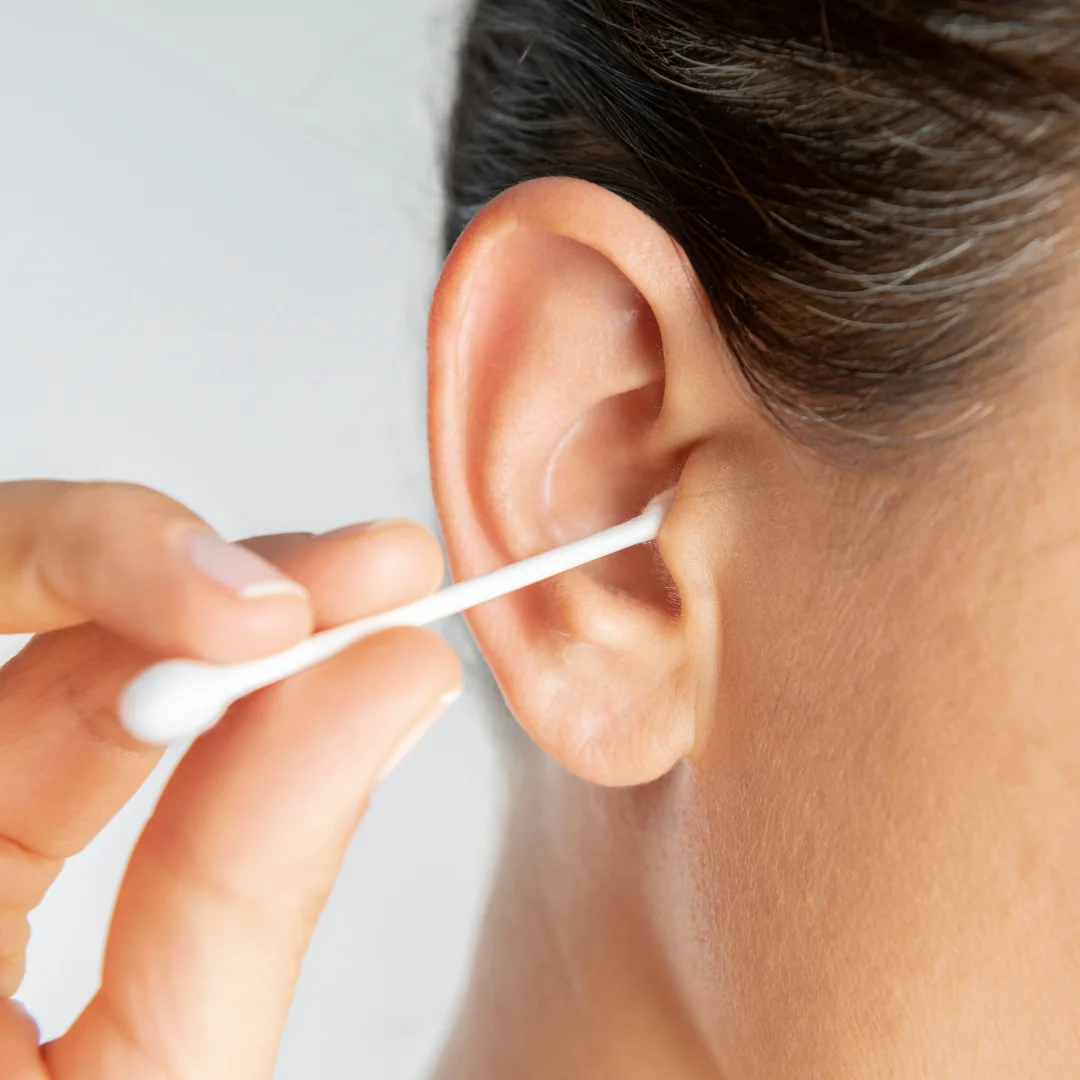
While many consider cotton swabs handy cleaning devices, placing them in the ear canal disrupts natural clearing and causes physical damage. We can determine whether earwax actually needs removal and recommend a method suited to your ear health. The auditory canal generally manages its own cleaning; however, should impaction arise, our team provides safe clinical earwax removal.
The Hidden Dangers of Cleaning Ears with Q-Tips
Clinically speaking, earwax, or cerumen, should never be regarded as dirt or debris. Cerumen collects particulate matter, inhibits microbial proliferation, moisturizes the epithelial lining, and shields sensitive canal tissues. Routine chewing and epithelial cell migration continuously transport spent wax toward the concha, where it falls out or clears during bathing.
Using a cotton swab within the ear canal halts this physiological self-cleaning function. Even though the applicator collects minor residue, it typically drives the bulk of cerumen directly toward the delicate eardrum. Continuous swab usage packs loose secretions into a hardened mass, generating an occluded sensation that tempts patients into additional probing.
You may gently utilize cotton swabs across the external auricle, but you should avoid inserting them into the internal canal.
How Cotton Swabs Cause Physical Trauma to the Ear
The sensitive skin protecting the ear canal exhibits extreme thinness and scratches effortlessly. Tiny skin lacerations provoke pain and bleeding while forming entry pathways for pathogens, multiplying the chance of external ear infections. Furthermore, the cotton fibers may separate from the stick, leaving a foreign body lodged within the canal.
Common mechanical traumas from swabs include:
- Severe earwax impaction near the tympanic membrane
- Scratches, irritation, swelling, or bleeding
- Localized microbial infection of the external canal
- Cotton swab fragments trapped inside the auditory canal
- Ruptured, torn, or perforated tympanic membrane
- Trauma inflicted on the ossicular chain behind the eardrum
- Transient hearing reduction or permanent sensorineural loss
- Tinnitus, dizziness, or severe ear pain
While severe structural trauma occurs infrequently, accidental elbow jostling, sudden slipping, or over-insertion can provoke profound injury.
Recommended Schedules and Timelines for Cerumen Removal
Most individuals do not need to perform earwax maintenance on a calendar schedule. Healthy ears continually move wax outward, and routine bathing usually cleans the visible outer ear. Aggressive hygiene removes protective lubricants, provokes skin inflammation, and heightens the likelihood of infection or cerumen buildup.
Removal becomes appropriate when wax blocks the canal, prevents us from examining the eardrum, interferes with a hearing aid, or causes discomfort.
Safe and Approved Home Techniques for Earwax Care
If earwax is not causing symptoms, leaving it alone is usually the safest option. Restrict hygiene to wiping the outer ear folds with a damp cloth while permitting the canal to self-evacuate.
When wax needs softening, we may recommend an over-the-counter cerumen-removal product or drops containing ingredients such as mineral oil, glycerin, saline, or carbamide peroxide. Follow the package directions meticulously regarding droplet quantity and consecutive days of use. Cease use at once if you experience localized pain, acute vertigo, cutaneous rash, or intensifying discomfort.
Performing irrigation at home is unsafe for certain individuals and must only proceed after a clinician verifies ear safety and explains the protocol. Never attempt to flush your ear canal with a pressurized dental water irrigator. Reject risky methods such as ear candling, rigid metal scoops, camera-guided probes, hairpins, and home suction gadgets. These products may burn, cut, puncture, or push wax farther inward.
Recognizing When Earwax Requires Clinical Intervention
You should book a clinical appointment if your ear feels blocked following softening drops, cerumen is deeply wedged, or home methods fail to work. Expert removal is the safest path for patients who struggle to hold still, individuals with narrow ear canals, hearing aid wearers, or those with surgical contraindications to irrigation.
Seek an examination for:
- Sharp ear pain, chronic itching sensations, or localized tenderness
- Blood, cloudy purulence, clear fluid leaks, or foul-smelling ear discharge
- Pyrexia or localized tissue swelling surrounding the ear canal
- New acoustic tinnitus sounds or unstable balance sensations
- Sudden reduction in hearing or auditory loss that persists after wax extraction
- Any concern of a ruptured eardrum or detached cotton swab tip
- Persistent impactions interfering with hearing aid operation
Treat sudden hearing loss in one ear as a medical emergency rather than assuming it’s wax. Immediate assessment allows clinicians to differentiate an external canal obstruction from an urgent inner-ear pathology.
Audiological Approaches to Excess Earwax Removal
We first examine the canal with an otoscope or microscope to confirm that wax is present and look for infection, injury, or an eardrum perforation. The most appropriate removal approach is determined by wax texture, canal structure, patient background, surgical history, and individual tolerance.
Safe audiological extraction methods include:
- In-office or pre-visit cerumen-softening drop applications
- Controlled ear flushing using warm, body-temperature water on intact eardrums
- Gentle micro-suction performed under clear binocular visualization
- Manual instrument clearance utilizing dedicated ear loops, fine curettes, or small forceps
Visual guidance empowers the clinician to protect delicate canal skin and pause immediately if sensitivity is detected. Resolving highly compacted or dry earwax often involves integrating multiple clinical removal techniques. Following cerumen extraction, a complete post-procedure examination verifies that the canal epithelium and tympanic membrane are intact. If aural fullness, ear ringing, dizziness, or auditory impairment remains after cleaning, further diagnostic evaluations can identify the root issue.
Arrange Safe In-Office Earwax Removal
When your ears feel plugged or you notice auditory changes, schedule an appointment with our specialists instead of grabbing a cotton swab. Your appointment can include a review of symptoms, previous ear procedures, hearing aid use, home treatments, and factors that may increase wax buildup. Reach out to our audiology clinic today to schedule your professional earwax-removal visit.